
Introduction
Have you ever looked up at the night sky and wondered what phase the Moon is in tonight? The Moon is one of the most noticeable objects in the sky, and its appearance changes every night. These changes are called What Is the Current Phase of the Moon as an Emoji, and they follow a predictable cycle that repeats roughly every 29.5 days.
Understanding tonight’s Moon phase is not only interesting for astronomy lovers but also helpful for photographers, travelers, astrologers, and anyone who enjoys stargazing. In this simple guide, you’ll learn how to identify the Moon phase, what each phase means, and how to quickly discover what the Moon looks like tonight.
What Are Moon Phases?
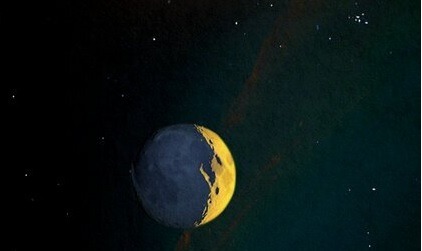
The Moon does not produce its own light. Instead, it reflects sunlight. As it orbits around Earth, we see different portions of its sunlit side. These changing views are called Moon phases.
There are eight main Moon phases:
- 🌑 New Moon
- 🌒 Waxing Crescent
- 🌓 First Quarter
- 🌔 Waxing Gibbous
- 🌕 Full Moon
- 🌖 Waning Gibbous
- 🌗 Last Quarter
- 🌘 Waning Crescent
Each phase shows how much of the Moon is illuminated from our perspective on Earth.
How the Moon Cycle Works
The Moon takes about 29.5 days to complete one full cycle. This is called a lunar month. During this time, the Moon moves through all its phases in order.
- It starts dark (New Moon 🌑)
- Slowly becomes visible (Waxing Crescent 🌒)
- Reaches half illumination (First Quarter 🌓)
- Becomes nearly full (Waxing Gibbous 🌔)
- Becomes fully bright (Full Moon 🌕)
- Then slowly shrinks again (Waning phases 🌖 🌗 🌘)
This cycle repeats every month, making it easy to predict future Moon phases.
How to Discover Tonight’s Moon Phase
You can find out tonight’s Moon phase using several simple methods:
1. Look at the Sky
The easiest way is to step outside at night and observe the Moon:
- Fully round and bright → 🌕 Full Moon
- Half illuminated → 🌓 or 🌗 Quarter Moon
- Thin curved shape → 🌒 or 🌘 Crescent
- Mostly lit but not full → 🌔 or 🌖 Gibbous
Even without tools, your eyes can often tell you the phase.
2. Use a Moon Calendar
Many websites and apps show daily Moon phases. They display exactly what the Moon looks like each night and even show rising and setting times.
3. Weather Apps and Astronomy Apps
Apps like:
- Google Weather
- Stellarium
- Sky Guide
- NASA apps
These tools instantly show tonight’s Moon phase with images and real-time updates.
4. Simple Memory Trick
You can remember this easy pattern:
- Waxing = growing light (getting fuller)
- Waning = shrinking light (getting smaller)
This helps you quickly understand what you’re seeing in the sky.
Why Moon Phases Matter
Moon phases are more than just beautiful sights. They also affect:
🌊 Ocean Tides
The Moon’s gravity influences tides in the ocean, especially during Full Moon and New Moon phases.
🌱 Agriculture
Farmers in some regions use Moon phases to guide planting and harvesting.
📷 Photography
Photographers prefer certain phases for night landscapes and astrophotography.
🧘 Cultural and Spiritual Practices
Many traditions and beliefs around the world are connected to Moon cycles.
What Tonight’s Moon Might Look Like
Without exact live data, tonight’s Moon could be any of the phases depending on the date in the lunar cycle. However, most nights fall somewhere between crescent, gibbous, or quarter phases.
If the Moon is near the middle of its cycle, it may appear as:
🌔 Waxing Gibbous or 🌖 Waning Gibbous
These phases are common and show a bright, partially full Moon in the sky.
Conclusion
Discovering tonight’s Moon phase is easy, fun, and fascinating. Whether you look at the sky, use an app, or follow a lunar calendar, you can always find out what the Moon looks like on any given night.
The Moon connects science, nature, and human curiosity in a simple yet powerful way. By understanding its phases, you not only learn about astronomy but also develop a deeper appreciation for the night sky.
So next time you step outside at night, take a moment to look up—you might just recognize tonight’s Moon phase instantly.